
Natural language understanding
Cognilist provides the semantic bridge between natural human descriptions and product catalogues, enabling fast and accurate matching of scanned products to items on the shopper's list.
Cognilist matches scanned products to natural human descriptions - automatically ticking items off your shopping list as you shop, while adapting to your habits and preferences over time.
Watch how Cognilist automatically ticks items off your shopping list as you scan them, getting smarter every time you shop.
Everything you need to deliver a smoother, frictionless shopping experience.
Cognilist provides the semantic bridge between natural human descriptions and product catalogues, enabling fast and accurate matching of scanned products to items on the shopper's list.
Cognilist tailors every match to the individual shopper's wording, habits and preferences, adapting over time to make matching smarter and unique to each shopper.
Snap a handwritten list, recipe page, receipt, screenshot, or any other image. Cognilist will turn it into a structured, ready-to-shop list in seconds.
Connect to Cognilist via a simple, well-documented API from your existing self-scanning or smart cart technology. No new hardware or in-store infrastructure required.
Turn shopping lists into higher conversion, smarter offers, and deeper insights.
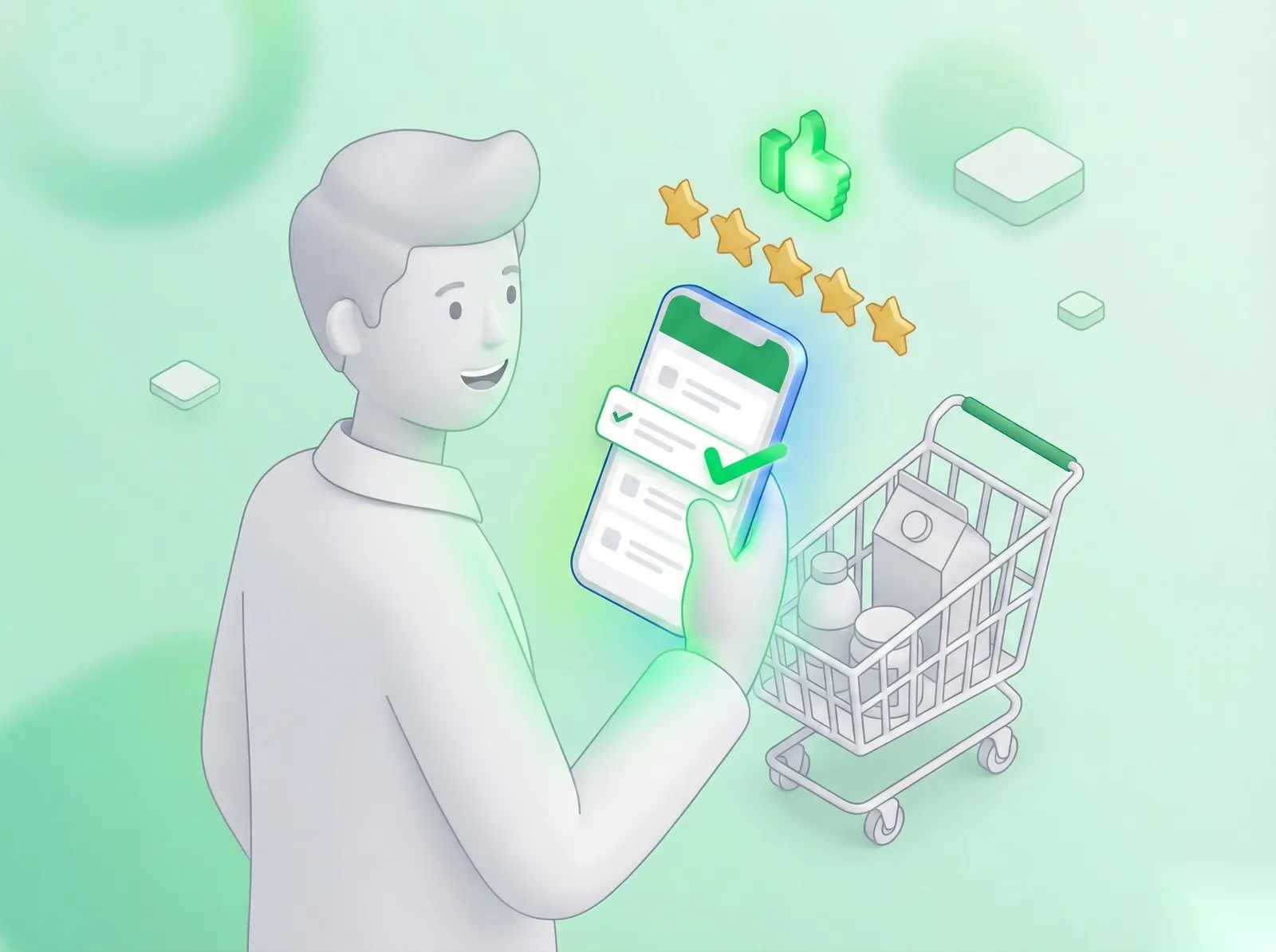
A smoother shopping experience leads to increased customer satisfaction and loyalty. Cognilist eliminates the burden of manual shopping list management, with personalization that feels effortless - turning each shopping trip into a faster, smarter and more satisfying experience that keeps customers coming back.
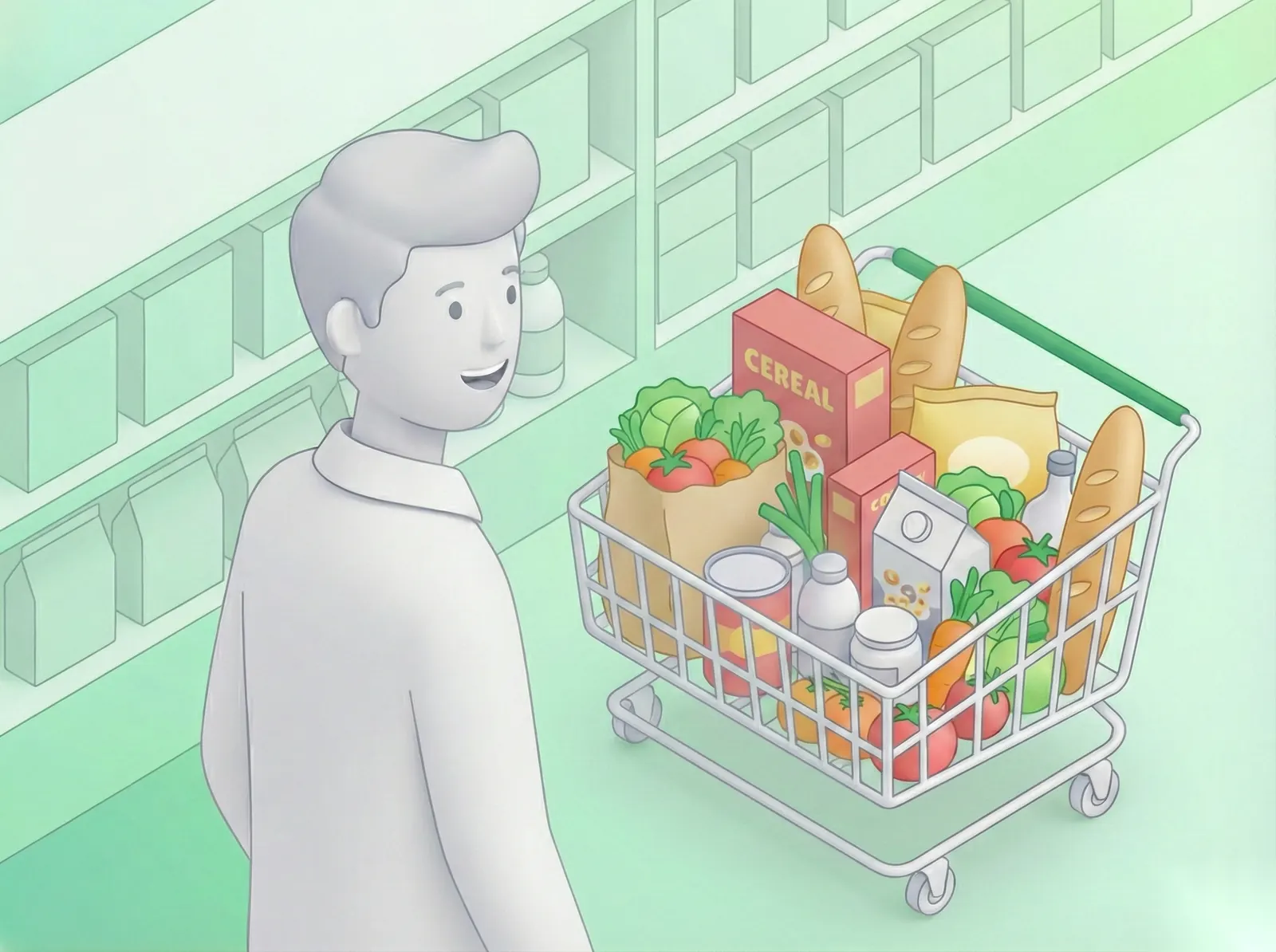
Manual shopping list management is time-consuming and error-prone, often leading shoppers to miss items they intended to buy. By automating list tracking in real time, Cognilist ensures shoppers leave the store with everything they came for - naturally increasing completion rates and average basket size.
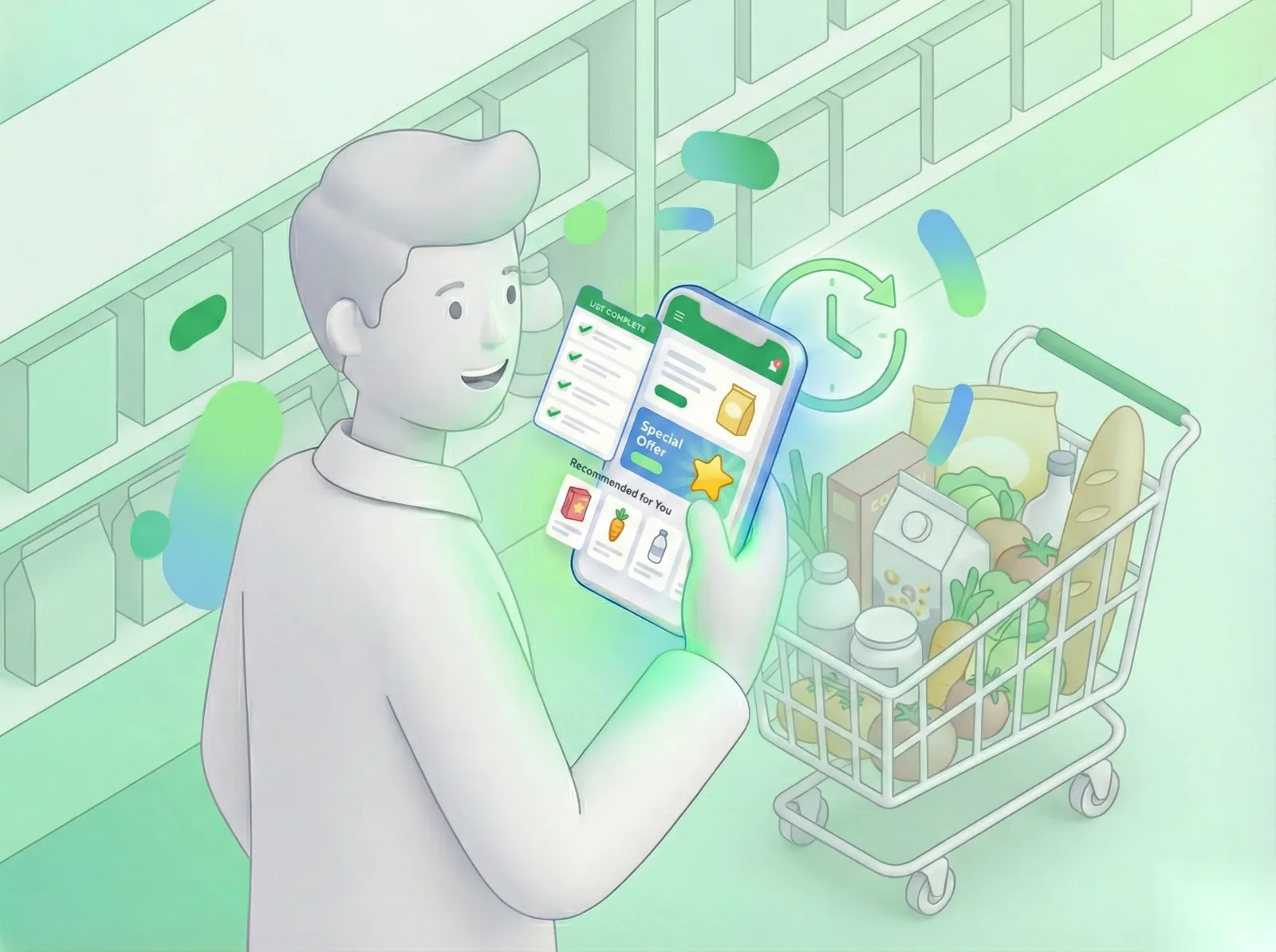
Many shoppers use self-scanning or smart cart technologies only to scan products, relying on separate apps or devices to manage their shopping list. By integrating Cognilist directly into these experiences, shoppers stay engaged with the retailer's handset, mobile app or trolley screen throughout the trip - creating more opportunities to surface promotions, ads and product recommendations.
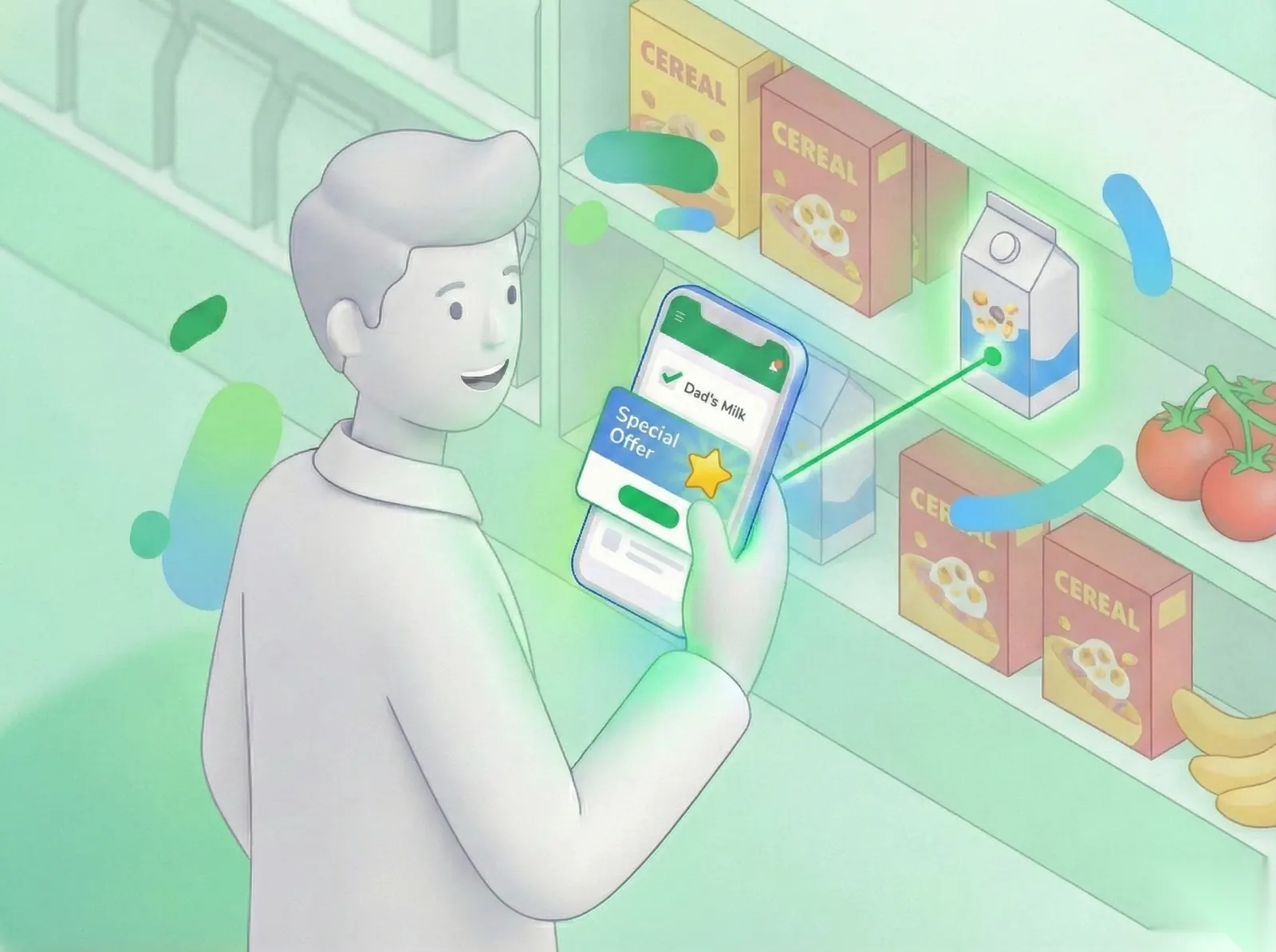
When a shopper adds items like “dad's milk” or “Max's cereal" to their list, Cognilist learns exactly which products those terms refer to over time. Retailers can use this understanding to surface perfectly timed promotions, relevant substitutes or premium alternatives - increasing offer relevance and conversion without spamming shoppers with irrelevant products. Unlike traditional targeting, which relies largely on historical purchase data, Cognilist can reveal real-time shopping intent. Knowing what a shopper plans to buy today is a far more powerful signal than what they bought last week.
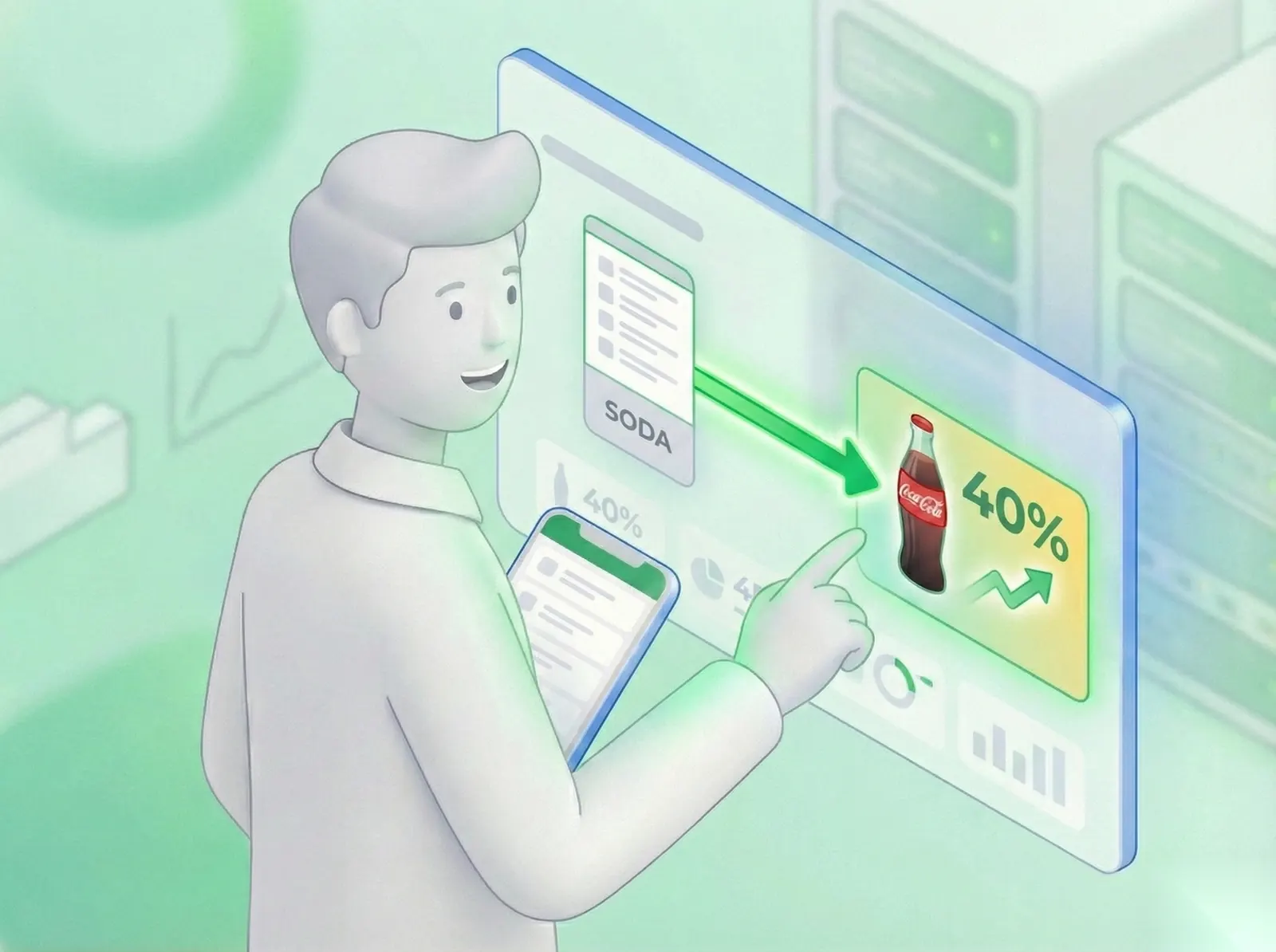
Beyond personalized list-to-product mappings, Cognilist unlocks powerful aggregate data. Retailers can finally see patterns like “40% of shoppers who list 'soda' buy Coca-Cola”, enabling smarter merchandising, better forecasting, and more targeted promotions.
Find quick answers to common questions about Cognilist. Get in touch to learn more.
The supermarket industry is rapidly moving towards self-scanning and “smart cart” technologies, giving shoppers greater convenience through faster checkouts, shorter queues, and live basket values. While these solutions streamline much of the in-store experience, shoppers are still left with the overhead of manually managing their shopping list - ticking items off as they go and keeping track of what's still to buy.
This often becomes an awkward process, involving switching between multiple devices or apps (or pen and paper for the more traditional shopper), leading to missed items and wasted time. Although many self-scanning solutions now offer built-in shopping list synchronisation, these lists typically require an exact product match in order for an item to be ticked off.
At Cognilist, we believe shoppers will always prefer to write their shopping lists in simple, natural language and browse in-store to find suitable products - rather than having to identify exact products before they even enter the supermarket.
Cognilist is an API-first platform that retailers can integrate into their existing self-scanning or smart cart solutions, mobile apps, websites, or any other customer touchpoint that benefits from intelligently matching exact products from a retailer's catalogue to a shopper's wish list.
Integration is straightforward. Cognilist is designed to plug into existing workflows with minimal disruption, allowing retailers to enhance their current technology stack without rebuilding core systems. Our API handles the intelligent matching logic, returning clear, actionable results that can be used to automatically tick items off a shopper's list as products are scanned or added to their basket.
Cognilist does not store any customer data or use it for model training. Data sent to Cognilist - such as shopping list items, scanned product information, or shopper preferences - is processed only to generate a response and is then immediately discarded.
Cognilist learns from shopper feedback over time, adapting to each shopper's preferences, habits, and language to deliver a truly personalised experience.
Imagine a shopping list containing the item “dad's milk”. The first time Cognilist encounters this, it has no prior context and will match any scanned milk product. However, Cognilist allows shoppers to manually correct a match - and it learns from that feedback to improve future results for that individual shopper.
If the shopper indicates that “dad's milk” refers to a specific dairy-free milk, Cognilist learns that, for this shopper, "dad's" implies a dairy-free preference. Crucially, Cognilist is not simply memorising a single product-to-item mapping; it is learning the underlying meaning behind the wording.
As a result, any dairy-free milk product scanned in the future will correctly tick off “dad's milk”. The learning also generalises: if the shopper later adds “dad's butter” to their list, Cognilist will correctly match it to dairy-free butter products without additional input.
Cognilist goes beyond simple classification to build a deeper understanding of each shopper, becoming smarter every time they shop.
This personalization is achieved without storing any customer data on Cognilist servers. Retailers retain full control of shopper preferences and simply pass the relevant context to Cognilist with each scan.
Download our demo app below to try Cognilist for yourself - no sign-up required. We also encourage you to contact us to discuss your specific use case. If you like what you see, we'd be delighted to arrange a pilot of Cognilist within your existing stack.
No sign-up required - simply install the Cognilist demo app and start scanning.
The Cognilist app is provided for demonstration purposes only. It exists to showcase the capabilities of the Cognilist platform, illustrate how Cognilist could look and function when integrated into a mobile app, self-scanning handset, or smart cart, and enable quick and easy evaluation.
The barcode-to-product lookup functionality is backed by publicly available data and may not be exhaustive or fully accurate. If you'd like to try Cognilist within your own stack using your own product catalogue, please get in touch to discuss a pilot.
Want to learn more? Ready to explore a pilot? Get in touch!